Colloid & Interface Science
Industry Overview
Key Features
Challenges in colloid science include aggregation, sedimentation, and phase separation. Stability depends on particle size, surface charge, and interfacial tension. Poor stability leads to product failure, reduced shelf life, and compromised performance.
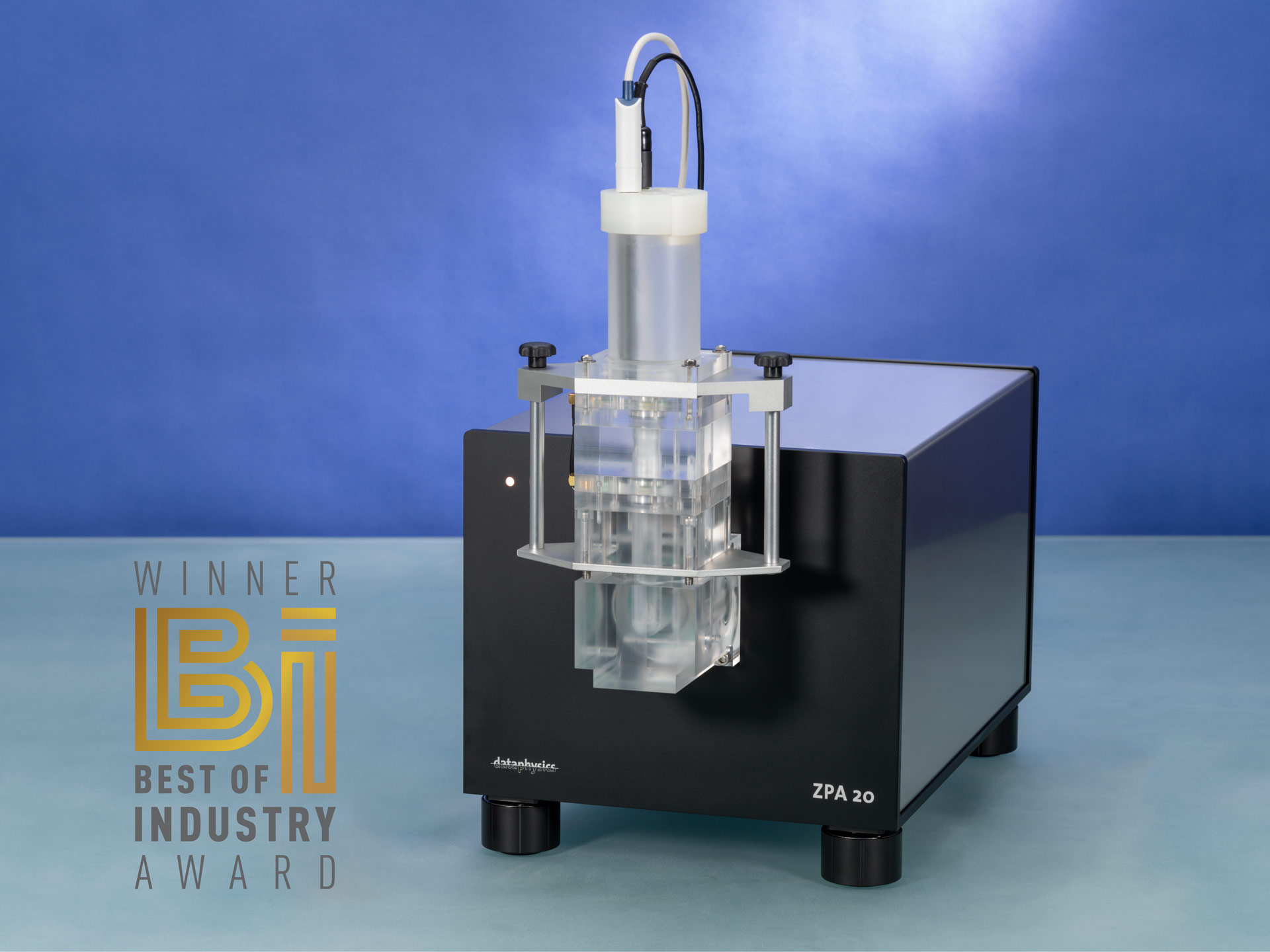
DataPhysics Instruments provide solutions. The ZPA 20 measures zeta potential, indicating electrostatic repulsion between particles. High zeta potential values suggest strong stability, while low values indicate risk of aggregation. The MultiScan system monitors dispersion stability over time, detecting early signs of destabilization. The DCAT tensiometer measures interfacial tension, helping researchers understand how surfactants and stabilizers affect colloidal systems.
In R&D, these tools allow scientists to optimize formulations by adjusting stabilizers, surfactants, and particle size. In production, they support quality assurance by providing reproducible, automated measurements that ensure consistency across batches.
Colloid & Interface Science is not just about studying mixtures—it is about engineering interactions at the microscopic level to achieve desired performance. DataPhysics Instruments empower researchers to achieve this control, driving innovation across industries.
Typical Tests & Applications
- Zeta Potential Measurement (ZPA 20)
- Purpose: Assess particle surface charge.
- Application: Predict stability and prevent aggregation.
- Benefit: Optimize stabilizer use.
- Dispersion Stability Monitoring (MultiScan)
- Purpose: Track colloid behavior over time.
- Application: Detect sedimentation or phase separation.
- Benefit: Ensure long shelf life.
- Interfacial Tension Measurement (DCAT)
- Purpose: Evaluate surfactant effectiveness.
- Application: Improve colloid stability.
- Benefit: Enhance product performance.
- Dynamic Contact Angle Analysis (OCA, DCAT)
- Purpose: Study particle wetting in liquid.
- Application: Enhance dispersion.
- Benefit: Prevent clumping and separation.
- Environmental Simulation (HGC)
- Purpose: Test stability under humidity and temperature changes.
- Application: Validate real-world performance.
- Benefit: Ensure product reliability.
These tests provide scientists with actionable data to design stable, effective colloidal systems, ensuring innovation and reliability across industries.
Industry Resources
No Resources Available
We're currently updating our resource library for this industry. Check back soon or contact us to request specific documentation.
Request DocumentationSupporting Products
 Contact Angle & Surface Tension
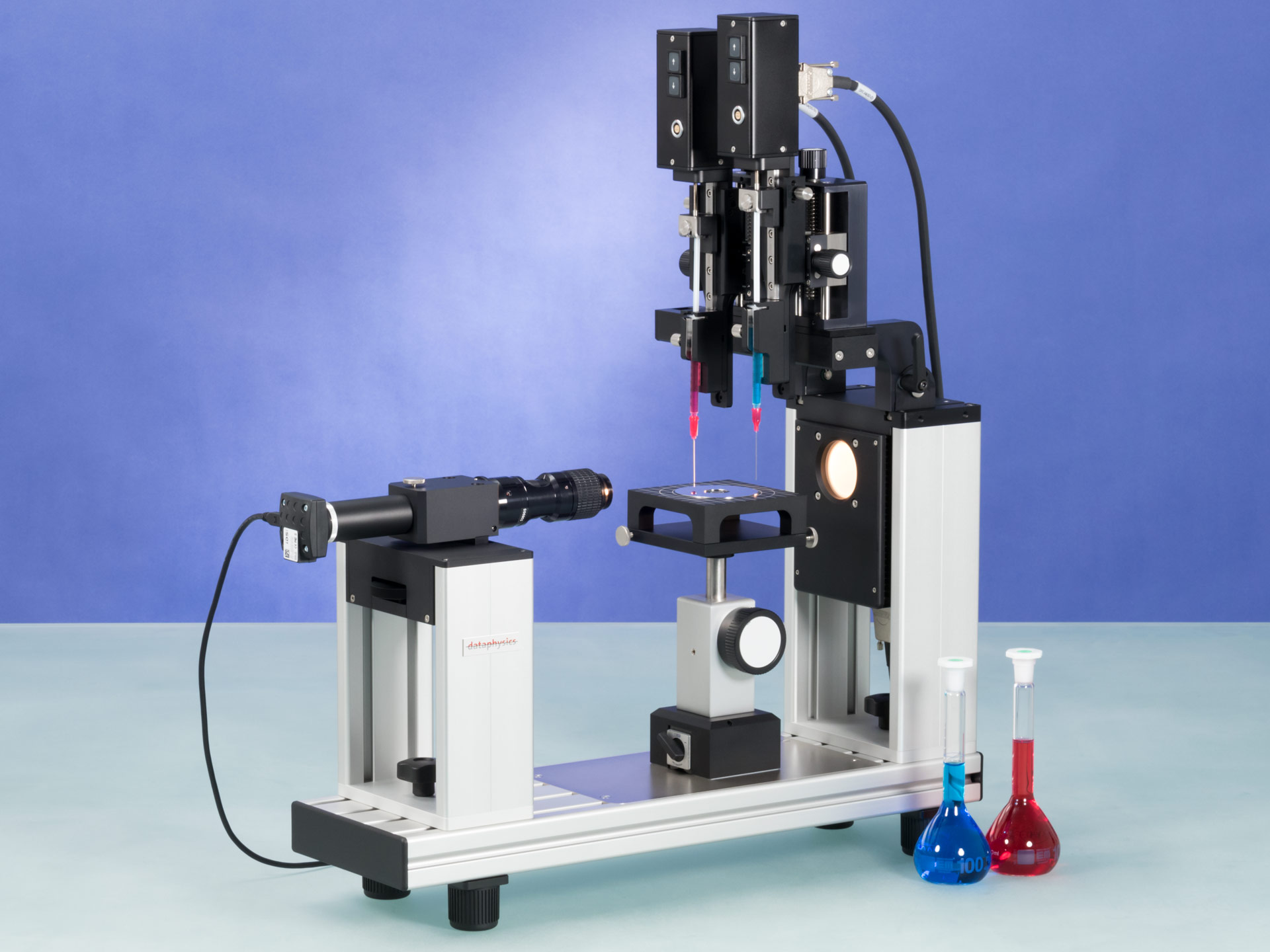
DCAT – Dynamic Contact Angle measuring devices and Tensiometer
The versatile DCAT Series combines dynamic contact angle measuring devices and force tensiometers to...
 Contact Angle & Surface Tension
OCA – Optical contact angle measuring and contour analysis systems
The OCA Series by DataPhysics comprises high-precision optical contact angle goniometers and drop-sh...
 Contact Angle & Surface Tension
SVT – Spinning drop Video Tensiometer
The SVT 25 is a specialized optical instrument for measuring ultra-low interfacial tensions and dy...
 Contact Angle & Surface Tension
ZPA – Zeta Potential Analyzer
The ZPA 20 is a compact, high-precision instrument that measures surface zeta potential of macrosc...

Ready to Find the Right Solution?
Our team can help you select the perfect products for your Colloid & Interface Science applications